









Signs of Blocked Gutters: How to Spot Drainage Problems Before They Damage Your Home
24.07.2026 08:23 | Категория: Общие советыBlocked gutters often begin as a minor maintenance issue, but they can gradually create much larger problems around a property. When rainwater cannot move freely through the guttering system, it may overflow, run down exterior walls, collect near the foundations or place additional weight on brackets and fascia boards.
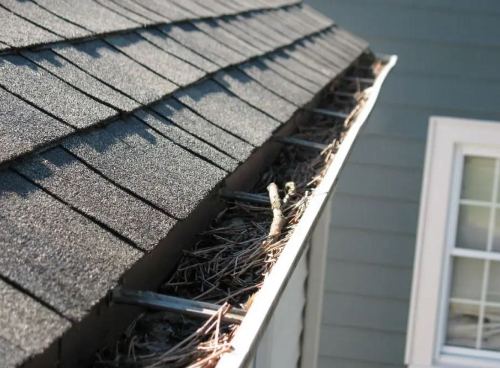
The difficulty is that gutter blockages are not always obvious from ground level. A downpipe may still release some water even when leaves, moss and debris have reduced the flow. In other cases, the first visible sign appears only during heavy rain, when water begins spilling over the edge.
Recognising the early signs of blocked gutters helps homeowners act before moisture affects the roofline, walls or drainage around the building.
Why gutters become blocked
Open gutters naturally collect material from the roof and surrounding environment.
Common causes include:
- fallen leaves;
- roof moss;
- small branches;
- dirt and dust;
- bird nesting material;
- fragments of roofing material;
- seeds and organic debris;
- objects carried by strong wind.
The material may initially allow water to pass through. Over time, however, it becomes compacted and forms a denser blockage.
Wet leaves and moss can create a heavy layer inside the gutter. Fine dirt then fills the gaps between larger pieces, reducing the amount of space available for water.
The outlet leading into the downpipe is particularly vulnerable. Even when the rest of the gutter appears relatively clear, a blockage around the outlet can stop water from leaving the system efficiently.
Water overflowing from the gutter
Overflowing water is the most recognisable sign of a blockage.
During rainfall, water should travel along the gutter towards the outlet and downpipe. If the flow is restricted, the water level rises until it spills over the edge.
Overflow may occur along a long section of gutter or from one specific point. A localised overflow often indicates that debris has collected near an outlet, joint or low section.
Repeated overflow can damage:
- exterior walls;
- mortar joints;
- render;
- paint;
- timber fascia boards;
- window frames;
- paths below the roofline.
A single overflow during an exceptionally intense storm does not always indicate a serious problem. However, regular spilling during normal rainfall usually means the system requires inspection.
Water running down exterior walls
A dark wet line on the outside of a building may be connected to a blocked or leaking gutter.
When water escapes from the roofline, it often follows the same path down the wall. Repeated wetting can create visible staining and encourage algae growth.
Brickwork is designed to cope with normal exposure to weather, but constant concentrated water can gradually affect the mortar and surrounding finishes.
Check whether the damp area sits directly below:
- a gutter joint;
- an outlet;
- a visible dip;
- a damaged section;
- a point where water overflows.
Water staining may also reveal that a gutter joint has moved or that the channel is no longer aligned correctly.
Sagging or uneven gutters
A gutter filled with wet debris becomes much heavier than an empty one.
The additional load can cause brackets to loosen or the gutter to bend between support points. This creates a visible sag.
Once a low point develops, water naturally collects there. The standing water adds more weight, making the sagging progressively worse.
From ground level, compare the gutter line with the edge of the roof. Look for:
- dips between brackets;
- sections pulling away from the fascia;
- uneven joints;
- a change in angle;
- water remaining after rainfall.
A sagging gutter may need cleaning, realignment or repair. Simply adding another bracket may not solve the problem if the existing fascia is damaged or the downpipe remains blocked.
Plants growing from the gutter
Vegetation growing from a gutter is a clear sign that debris has been present for a long time.
Leaves, dirt and moss can form a soil-like layer. Seeds carried by birds or wind may then begin to grow.
Small plants may appear harmless, but their roots hold additional moisture and trap more debris. They also add weight to the gutter.
Visible vegetation usually means the system requires more than a quick surface clean. The gutter should be cleared thoroughly, and the outlet and downpipe should also be checked.
Weak or irregular flow from the downpipe
A downpipe does not need to be completely blocked to create a problem.
Partial obstruction may still allow water to pass, but the flow will be slower than expected. During light rain, the system may appear to work normally. During heavier rainfall, the gutter fills faster than the downpipe can empty it.
Possible signs include:
- a weak stream from the lower outlet;
- water arriving in short bursts;
- unusual gurgling sounds;
- water leaking from pipe joints;
- overflow from the gutter above;
- water escaping behind the pipe.
The blockage may be close to the top of the pipe or further down inside it. Bends and connectors are common places for debris to become trapped.
Dripping joints when the rain has stopped
A small amount of dripping immediately after rainfall can be normal. Continuous dripping from a joint may indicate trapped water.
If a blocked outlet prevents the gutter from draining fully, water may remain inside the channel. It then escapes slowly through weak joints or seals.
This can make the problem appear to be a leaking connector when the real cause is restricted drainage.
Before replacing a seal or joint, it is useful to confirm that the gutter and downpipe are clear.
Water collecting near the base of the property
The purpose of a rainwater system is not only to remove water from the roof. It must also direct that water away from the building safely.
Blocked gutters or downpipes may cause water to fall close to the wall instead of entering the intended drainage point.
Look for:
- puddles below the roof edge;
- saturated soil near the wall;
- splash marks on lower brickwork;
- erosion around downpipe outlets;
- water crossing paths;
- damp patches near air bricks;
- overflowing ground-level gullies.
Standing water close to a building can increase moisture around lower walls and foundations. It may also make nearby paths slippery or unstable.
Damp patches inside the property
Not every internal damp patch is caused by blocked gutters, but the roofline should be considered when moisture appears near an exterior wall.
Warning signs may include:
- peeling paint;
- discoloured plaster;
- a musty smell;
- mould near ceilings or corners;
- damp patches after rain;
- staining around upper windows.
Water overflowing outside may penetrate through damaged mortar, roofline gaps or weak seals.
Internal symptoms often appear some distance from the original source, so the entire exterior area above the damp patch should be checked.
Damage to fascia boards and soffits
Fascia boards and soffits are positioned close to the gutter and may be affected when the system overflows.
Timber fascia can absorb water, especially if paint or protective coatings have deteriorated. Repeated moisture may lead to softness, rot or difficulty holding gutter brackets securely.
Possible signs include:
- peeling paint;
- dark staining;
- cracked surfaces;
- soft timber;
- brackets pulling away;
- gaps around the roof edge;
- loose soffit panels.
Once the fascia becomes weak, the gutter may no longer remain stable even after cleaning.
Birds and insects around the gutter
Bird activity near a gutter may indicate nesting material or accumulated debris.
Small twigs, leaves and other materials can obstruct water flow. Insects may also be attracted to standing water and damp organic matter.
Regular activity around one section of the roofline is worth observing, particularly during nesting seasons.
Any inspection or removal should be carried out carefully and in accordance with local wildlife protections.
Unusual sounds during rainfall
Blocked drainage can sometimes be heard before it is clearly seen.
Possible sounds include:
- water splashing over the edge;
- gurgling inside a downpipe;
- dripping behind the gutter;
- water striking a wall or window ledge;
- repeated tapping from a loose section.
Listening during rainfall can help identify the general location of the problem.
A correctly working system should move water steadily without excessive splashing or overflow.
Why checking during rain is useful
Many gutter problems are difficult to confirm in dry weather.
A visual inspection during moderate rain can show:
- where water begins to overflow;
- whether the gutter is holding too much water;
- whether joints leak;
- whether the downpipe carries a steady flow;
- whether ground drains can cope;
- whether water is reaching the wall.
The inspection should be completed from a safe position. Climbing ladders during rain or strong wind is dangerous.
Homeowners dealing with typical central England weather can review this gutter cleaning support for properties in Derby, which explains common maintenance issues and signs that a local rainwater system may need attention.
How often gutters should be checked
There is no single schedule suitable for every property.
The required frequency depends on:
- nearby trees;
- roof moss;
- the age of the guttering;
- the shape of the roof;
- previous blockages;
- exposure to wind;
- local rainfall;
- the number of outlets and downpipes.
A property surrounded by trees may require several checks during and after autumn. A more open property may need less frequent cleaning.
Useful times for inspection include:
- after leaf fall;
- before wetter seasons;
- after strong winds;
- after roof work;
- when overflow is observed;
- when damp staining appears.
Regular checks are generally easier and cheaper than dealing with damage caused by repeated overflow.
Safe cleaning and maintenance
Some low-level gutter maintenance may be manageable for a homeowner with suitable equipment and safe access.
However, working at height carries serious risk.
Do not:
- use an unstable ladder;
- work alone where a fall is possible;
- lean sideways beyond the ladder;
- stand on a conservatory roof;
- work during rain or strong wind;
- place weight directly on the gutter;
- force tools into a downpipe without understanding its layout.
Where the gutter is high, difficult to access or positioned above an extension, professional cleaning is usually the safer option.
After debris has been removed, the gutter can be tested with a controlled amount of water. The flow should move towards the outlet without collecting in low sections.
When cleaning may not be enough
A blocked gutter can sometimes hide additional defects.
Once the system is clear, check for:
- loose brackets;
- cracked gutter sections;
- separated joints;
- damaged seals;
- incorrect fall;
- rotten fascia boards;
- blocked ground drainage;
- damaged downpipes.
If the gutter continues to overflow after cleaning, the system may have insufficient capacity, poor alignment or another drainage problem.
Repeated failure in the same area should be investigated rather than treated with temporary fixes.
Preventing future blockages
No gutter system remains completely free from maintenance, but several steps can reduce the risk of serious obstruction.
These include:
- regular inspection;
- removing leaves before they compact;
- controlling excessive roof moss;
- trimming branches near the roof;
- checking outlets carefully;
- repairing sagging sections;
- keeping ground drains clear;
- monitoring the system during rain.
Gutter guards may reduce the amount of larger debris entering the system, but they do not eliminate maintenance. Fine material can still collect, and guards themselves may need cleaning.
Conclusion
Blocked gutters rarely begin as a dramatic problem. They usually develop gradually as leaves, moss and dirt restrict the movement of water.
The main warning signs include overflowing water, wet exterior walls, sagging gutters, weak downpipe flow, dripping joints, plants growing from the channel and water collecting near the building.
Early action helps protect fascia boards, brickwork, exterior finishes and surrounding drainage.
The most useful approach is to observe the system during rainfall, inspect it after seasonal changes and arrange cleaning before debris becomes heavily compacted.
A clear gutter may be a small part of the property, but it plays an important role in controlling rainwater and preventing avoidable moisture damage.
Оставить комментарий